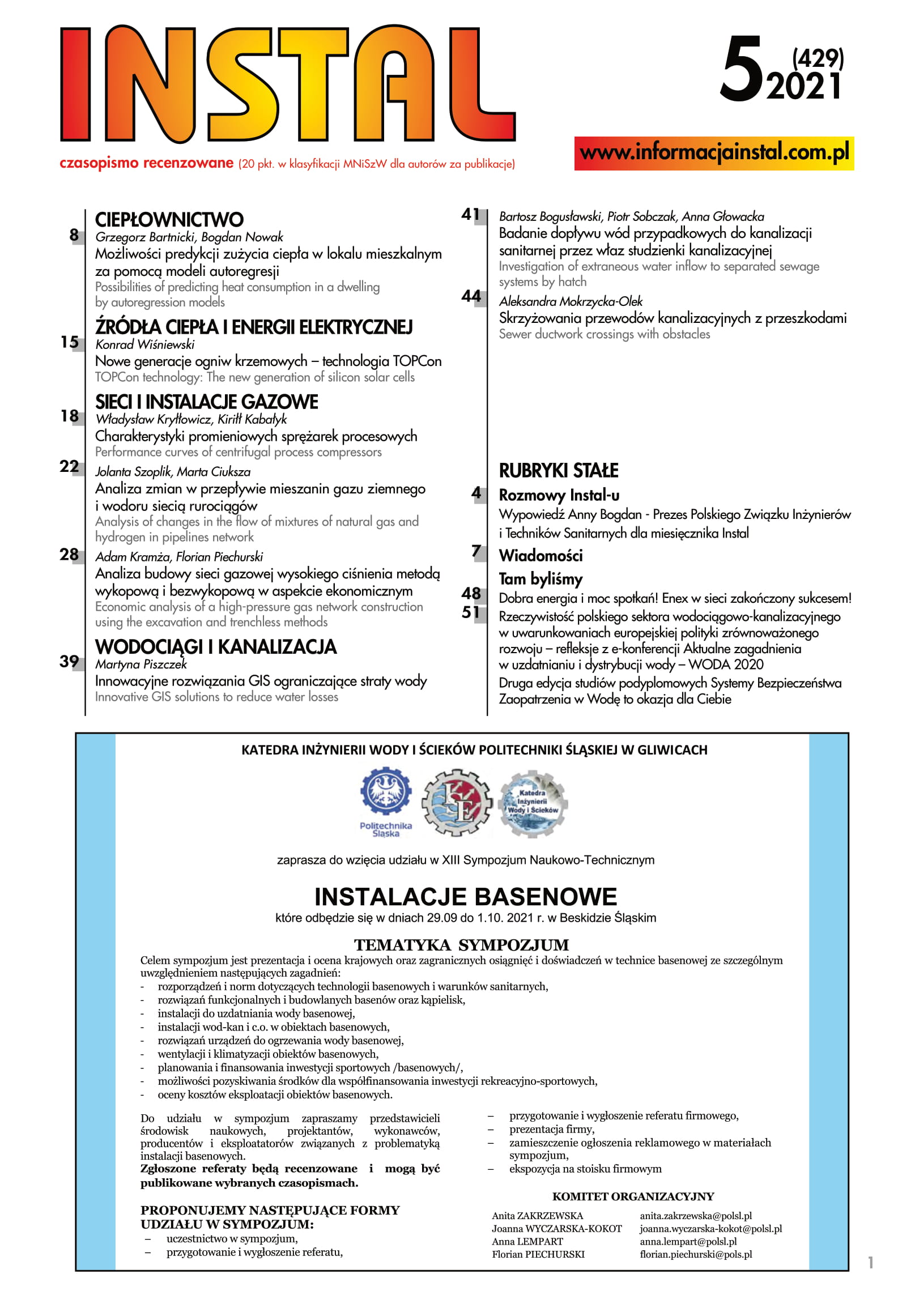
Investigation of extraneous water inflow to separated sewage systems by hatch
DOI:
https://doi.org/10.36119/15.2021.5.5Keywords:
extraneous water in sanitary sewer system, separate sewage system, rainwater, extraneous waterAbstract
Extraneous water poses a substantial problem in the exploitation of separate sewerage systems. Many studies show that accidental water can reach 66% of the annual sewage supply to the system. Field observations lead to the supposition that a considerable stormwater volume could permeate to sewage system by hatches. In the investigation measurement device mounted under the hatch was used. The aim was to determine a real inflow to the sewage well during precipitation. In the two months of research, the whole inflow by hatch was 3,2 m3 and a maximum daily inflow was 801,8 dm3. The influence of daily precipitation on pump station flow was examined. In the two days with the highest rain height, the pump station flow was 63% and 118% higher than the average flow in the considered period.
Downloads
References
G. Kaczor, P. Bugajski, i T. Bergel, „Zastosowanie metody trójkąta do obliczenia objętości wód infiltracyjnych i przypadkowych w kanalizacji sanitarnej”, Infrastruktura Ekol. Teren. Wiej., nr 3, s. 263–274, 2013.
O. Cieślak i J. Pawełek, „Dopływ wód obcych do kanalizacji sanitarnej na przykładzie gminy Mezos we Francji”, Instal, nr 7–8, 2014.
M. Beheshti i S. Saegrov, „Sustainability assessment in strategic management of wastewater transport system: a case study in Trondheim, Norway”, Urban Water J., t. 15, nr 1, s. 1–8, 2018
Downloads
Published
License

This work is licensed under a Creative Commons Attribution 4.0 International License.
Authors retain copyright and grant the journal the right of first publication, with the work simultaneously licensed under a Creative Commons Attribution 4.0 International License, which permits others to share the work with appropriate acknowledgment of the authorship and initial publication in this journal.