
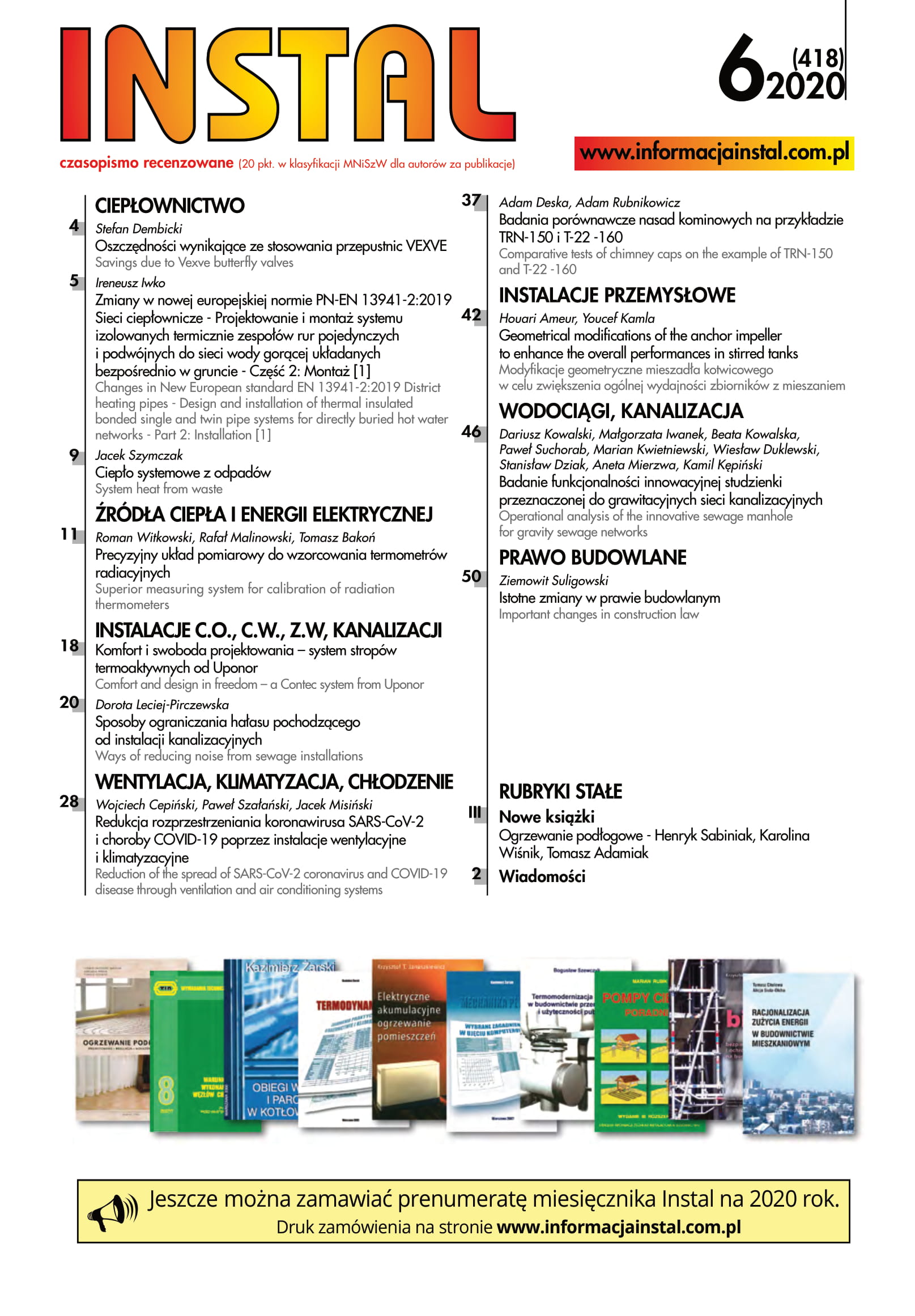
Reduction of the spread of SARS-CoV-2 coronavirus and COVID-19 disease through ventilation and air conditioning systems
DOI:
https://doi.org/10.36119/15.2020.6.3Keywords:
coronavirus, SARS-CoV-2, COVID-19, ventilation, HVACAbstract
The article analyses potential ways of spreading the SARS-CoV-2 virus in typical existing ventilation and air conditioning systems in non-health facilities. The recommendations presented by ASHRAE, REHVA, EUROVENT MIDDLE EAST and Polish National Institute of Public Health (NIZP-PZH) have been used. Ventilated rooms and particular elements of the ventilation system: route and tightness of ventilation ducts, air handling units, as well as the location of the fresh air intake and exhaust air outlet were taken into account. The analysis of pressure distribution profiles in duct systems and for various air handling units types was made. A number of methods of reducing the risk of spreading COVID-19 in ventilation systems were proposed, with particular emphasis on reduction of possible air leaks. A procedure was formulated to enable the achievement of this objective.
Downloads
References
McDermott C. V., Alicic R. Z., Harden N., Cox E. J., Scanlan J. M., Put a lid on it Are faecal bio-aerosols a route of transmission for SARS-CoV-2, Journal of Hospital Infection, journal pre-proof, 15 April 2020, https://DOI.org/10.1016/j.jhin.2020.04.024
ASHRAE Position Document on Infectious Aerosols, April 14, 2020.
REHVA COVID-19 guidance document, April 3, 2020
Downloads
Published
Issue
Section
Categories
License

This work is licensed under a Creative Commons Attribution 4.0 International License.
Authors retain copyright and grant the journal the right of first publication, with the work simultaneously licensed under a Creative Commons Attribution 4.0 International License, which permits others to share the work with appropriate acknowledgment of the authorship and initial publication in this journal.