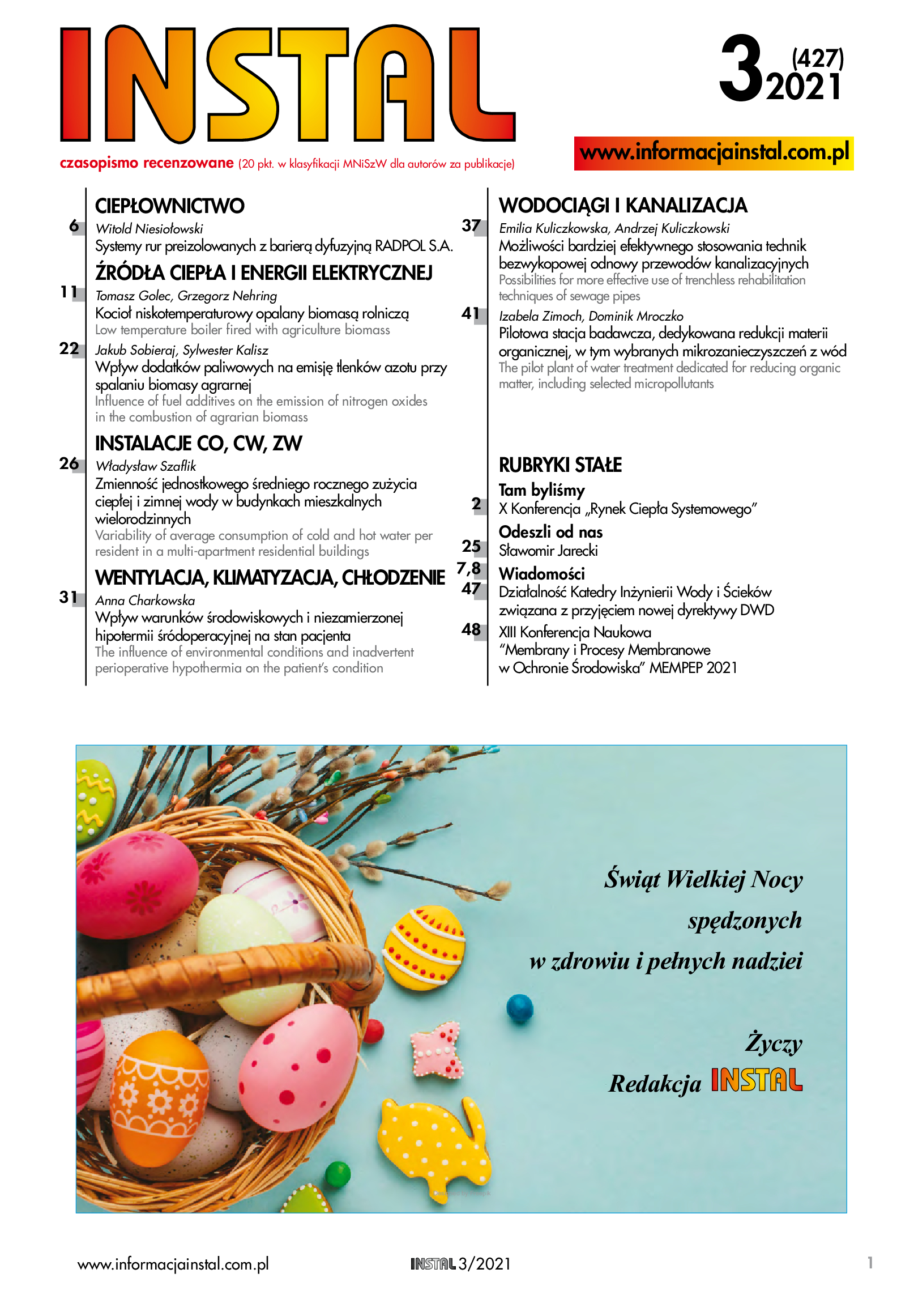
The influence of environmental conditions and inadvertent perioperative hypothermia on the patient’s condition
DOI:
https://doi.org/10.36119/15.2021.3.4Keywords:
operating room, hospital, ventilation, air conditioning, air parameters, medical staff, patients, comfort, discomfort, hypothermiaAbstract
Environmental conditions (temperature, humidity, air flow velocity, mean radiation temperature) and individual factors (physical activity, clothing insulation) affect the heat exchange between humans and the environment. In thermal balance conditions, a feeling of thermal comfort appears and the body’s thermoregulatory system works properly. In conditions where the thermoregulation mechanism is impaired, a person may be hypothermic or hyperthermic instead of normothermic. One of these situations (hypothermia) can occur in the operating room. Anesthesia, surgery and the operating room environment impair the body’s physiological thermoregulatory mechanisms. Inadvertent perioperative hypothermia, defined as a drop in core body temperature below 36° C, is the most common complication of perioperative care. The article focuses on the issues related to the occurrence of hypothermia of the operated patient, referring also to the indoor conditions in the operating room, maintained as a result of the operation of the ventilation and air conditioning system in the operating room.
Downloads
References
ANSI/ASHRAE/ASHE Standard 170-2017, Ventilation of Health Care Facilities
AST Guidelines for Best Practice in Maintaining Normothermia in the Perioperative Patient, 2019
Balaras CA, Dascalaki E, Gaglia A., HVAC and indoor thermal comfort conditions in hospital operating rooms, Energy and Building, 2007;39: s. 454–70
Białowolska KA, Horosz B, Grzelak M, Malec-Milewska M. Prewencja niezamierzonej hipotermii okołooperacyjnej jako czynnika zwiększającego ryzyko powikłań, w tym powikłań infekcyjnych. Zakażenia XXI wieku 2019;2(5):219–223
Downloads
Published
Issue
Section
Categories
License

This work is licensed under a Creative Commons Attribution 4.0 International License.
Authors retain copyright and grant the journal the right of first publication, with the work simultaneously licensed under a Creative Commons Attribution 4.0 International License, which permits others to share the work with appropriate acknowledgment of the authorship and initial publication in this journal.