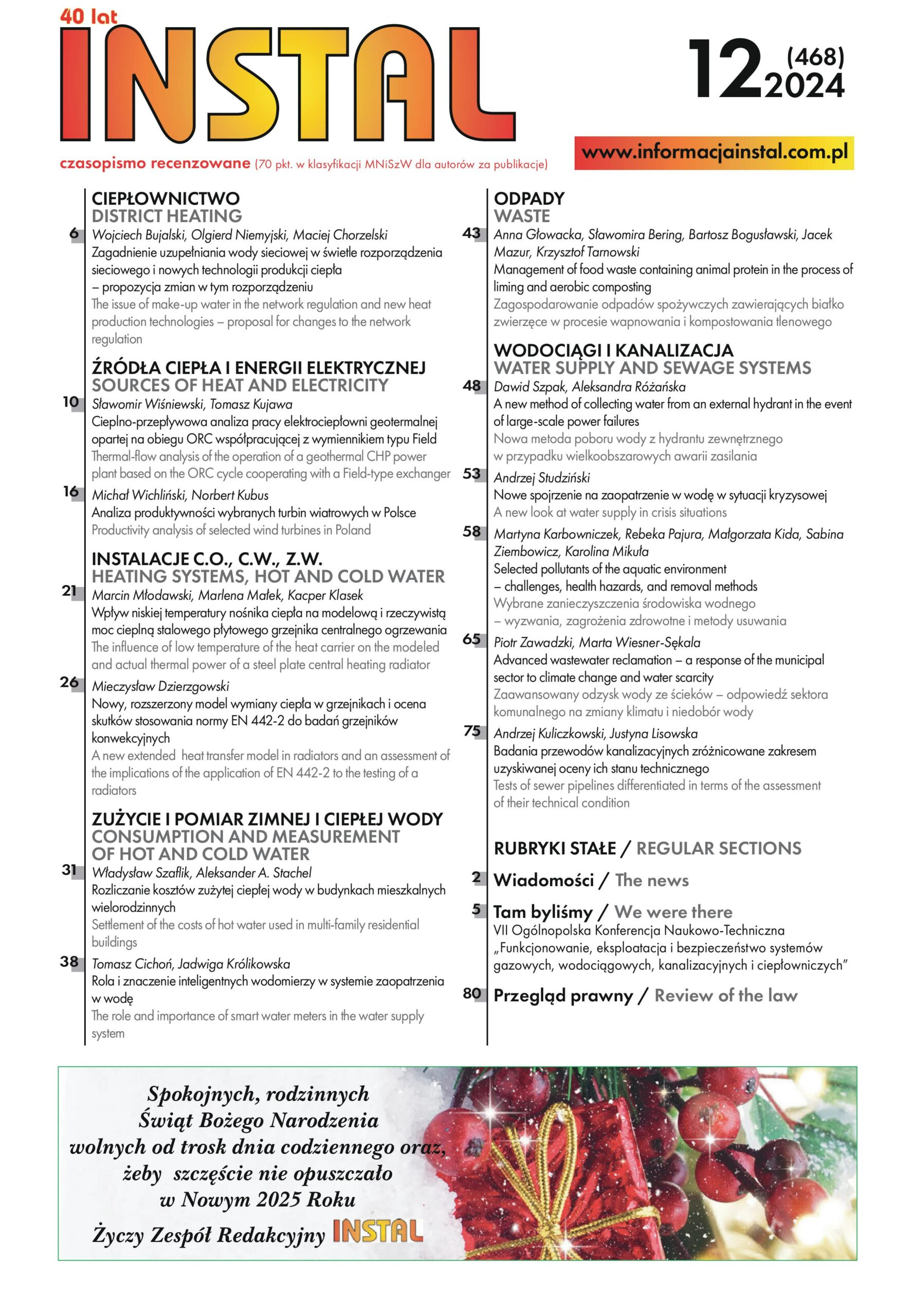
A new extended heat transfer model in radiators and an assessment of the implications of the application of EN 442-2 to the testing of a radiators
DOI:
https://doi.org/10.36119/15.2024.12.5Keywords:
radiator heat transfer model, mass flow rate and temperature supply changes, radiator efficiencyAbstract
Laboratory measurements and analyses conducted in a wide range of changes of water temperature and mass flow rate for different types of radiators allowed to provide limitations and assessment of the current radiators heat transfer model according to EN 442. The inaccuracy to determinate radiator heat output, according to EN 442, in case of low water mass flow rates may achieve up to 22,3%. A revised new extended heat transfer model for radiators (NEHTMiR), which with very high accuracy describes the heat transfer processes in a wide range of changes in operating parameters (in all range max inaccuracies below 2.5% ) is also presented. Achievement of the high compatibility of the results of the simulation calculations with the measurement results for different types of radiators: iron elements radiators, plate radiators, convectors in a very wide range of changes in the water mass flow rates and supply temperature indicates that a “New Verified Extended Heat Transfer Model in Radiators” can also be used in designing and simulating calculations of the central heating installations, for the rational conversion of existing installations into low temperature energy efficient systems, as well as to directly determine the actual temperature efficiency. This model may provide the basis for a necessary modification of European Standards for radiator testing.
Downloads
References
EN 442-1:2014 – Grzejniki i konwektory. Część 1: Wymagania i warunki techniczne.
EN 442-2:2014 – Grzejniki i konwektory. Część 2: Moc cieplna i metody badań.
Wasilewski W.: Średnia różnica temperatur przy zmiennej wartości współczynnika przenikania ciepła, Ciepłownictwo, Ogrzewnictwo, Wentylacja 1/1969 68
Downloads
Published
Issue
Section
Categories
License

This work is licensed under a Creative Commons Attribution 4.0 International License.
Authors retain copyright and grant the journal the right of first publication, with the work simultaneously licensed under a Creative Commons Attribution 4.0 International License, which permits others to share the work with appropriate acknowledgment of the authorship and initial publication in this journal.