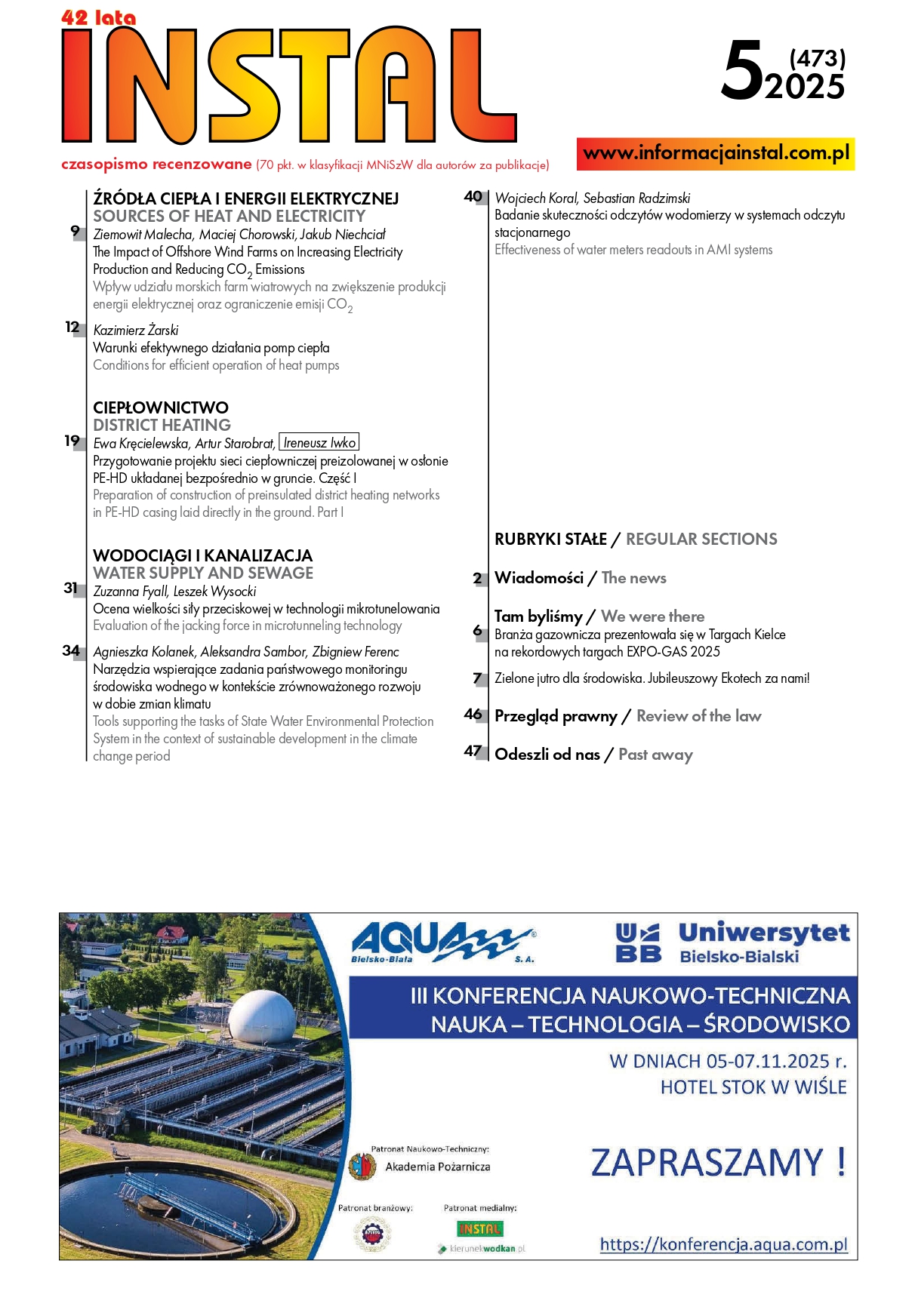
Tools supporting the tasks of State Water Environmental Protection System in the context of sustainable development in the climate change period
DOI:
https://doi.org/10.36119/15.2025.5.5Keywords:
river monitoring system, participatory monitoring,, water resources management,, Odra RiverAbstract
Striving for good water status is a challenge of the 21st century. According to the Water Framework Directive, such status is to be achieved in the European Union by 2027, in accordance with the principles of integrated water resources management. In the process of assessing the status of the aquatic environment, the OECD guidelines emphasize integrated management, stakeholder participation, risk management, economic efficiency, water quality protection, adaptation to climate change and international cooperation. However, a key element is water monitoring, including diagnostic, operational and research monitoring, in order to assess the ecological and chemical status. The history of water monitoring in Poland dates back to the 1960s, evolving along with regulations, including after Poland’s accession to the EU and after the implementation of the Water Framework Directive. The Chief Inspector for Environmental Protection (GIOŚ) carries out state environmental monitoring. In order to obtain a more effective
assessment of water quality, an extensive network of local monitoring and social participation are needed. The ecological disaster in the Odra river basin in 2022 caused significant changes related to access to current information on water quality. GIOŚ has introduced a pilot system of online monitoring, providing data on selected physicochemical parameters, but with limited repeatability of frequency and scope of data, which makes it impossible to determine trends in changes in physicochemical parameters and the occurrence of Prymnesium parvum. This indicates the need for further modernization, co-financing and improvement of the monitoring system, using modern digital technologies (online platforms, mobile applications, AI) and social participation to increase efficiency and faster response to threats. The role of aware users of the environment in reporting problems and collecting data is also key to the effectiveness of the system, shown on the example of changes in the monitoring of the Odra River.
Downloads
References
Dyrektywa 2000/60/WE Parlamentu Europejskiego i Rady z dnia 23 października 2000 r. ustanawiająca ramy wspólnotowego działania w dziedzinie polityki wodnej, Dz. Urz. UE L 327/1 z 22.12.2000 r.
Komunikat Komisji do Parlamentu Europejskiego, Rady, Europejskiego Komitetu Ekonomiczno-Społecznego i Komitetu Regionów. Plan ochrony zasobów wodnych Europy (Blueprint to Safeguard Europe’s Water Resources), 2012 r., COM(2012)673 final
Korol R., Ilościowe ujęcie zagadnienia jakości wód, Ochrona Środowiska nr 4/1981, str. 17-23
Korol R., Jaśniewicz E., Strońska M., Możliwości Wdrożenia Dyrektyw Unii Europejskiej w monitoringu wód i ścieków, Zeszyty Naukowe nr 118, Inżynieria Środowiska nr 8/1998, str. 75-86
Korol R., Jaśniewicz E., Strońska M., Zmiany jakości wód Odry w latach 1992-1997, Ochrona Środowiska nr 2(73)/1999, str. 19-23
Downloads
Published
License

This work is licensed under a Creative Commons Attribution 4.0 International License.
Authors retain copyright and grant the journal the right of first publication, with the work simultaneously licensed under a Creative Commons Attribution 4.0 International License, which permits others to share the work with appropriate acknowledgment of the authorship and initial publication in this journal.