
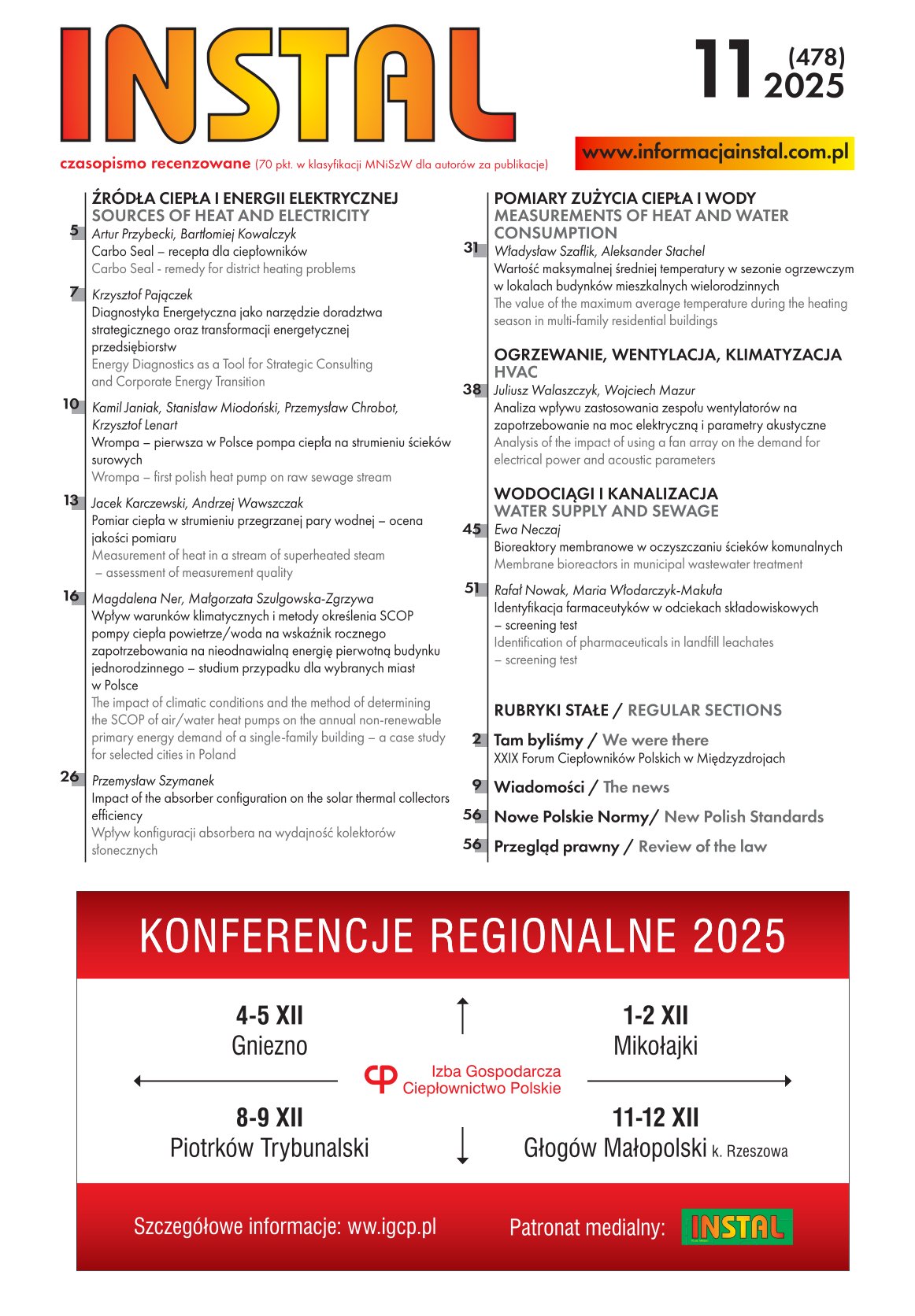
The impact of climatic conditions and the method of determining the SCOP of air/water heat pumps on the annual non-renewable primary energy demand of a single-family building – a case study for selected cities in Poland
DOI:
https://doi.org/10.36119/15.2025.11.3Keywords:
climate data, building energy calculations, SCOP, air/water heat pump, energy efficiency, EP indicator for the buildingAbstract
The article discusses changes in outdoor air temperature between sets of typical meteorological years compiled on the basis of data from 1971-2000 and 2001-2020 for five sample cities: Szczecin, Wrocław, Warsaw, Białystok, and Zakopane. The latest version of climate data indicates an increase in the average annual outdoor air temperature in each of the analyzed cities, by an average of 1.1°C, as well as a shortening of the heating season, depending on the location, from 2.2% to 7.0%. These changes are significant and will affect the results of energy calculations for buildings and installations. As part of the case study, the impact of the climate data correction for the above mentioned cities on the results of the calculation of the primary energy demand (EP) for a sample single-family house heated with an air/water heat pump was analyzed. It was found that for the analyzed building, the useful energy demand for heating and ventilation decreased by 2.9% to 18.8%, depending on the location of the building, when using the newer set of climate data. The seasonal efficiency of the air/water heat pump (SCOP) was determined in accordance with the guidelines of two standards: PN–EN 14825 and PN–EN 15316, and compared with the values recommended by the regulation on the methodology for determining the energy performance of buildings or parts of buildings and energy performance certificates. The SCOP values calculated in accordance with both standards were higher than those indicated in the above regulation. When using the method specified in PN–EN 15316 to calculate the efficiency of a device operating in heating mode in a building located in Szczecin, the difference was as high as 54%. In the final stage of the analysis, the impact of climate data and the method of determining the SCOP of an air/water heat pump on the EP index of a single-family house in different locations was assessed. When using climate data developed for 1971-2000 and SCOP values recommended by the aforementioned regulation in the calculations, the EP index of the building in any location did not meet the current requirements set out in the regulation on technical conditions to be met by buildings and their location. At the same time, it was demonstrated that when using more recent climate data developed for the years 2001-2020 and performing SCOP calculations for heat pumps in accordance with the guidelines of PN-EN 15316, it was possible to meet the EP requirement in four out of five locations.
Downloads
References
Rozporządzenie Ministra Infrastruktury z dnia 12 kwietnia 2002 w sprawie warunków technicznych, jakim powinny odpowiadać budynki i ich usytuowanie, Dz.U. 2022 poz.1225
Typowe lata meteorologiczne i statystyczne dane klimatyczne dla obszaru Polski do obliczeń energetycznych budynków, https://dane.gov.pl/pl/dataset/797,typowe-lata-meteorologiczne-i-statystyczne-dane-kli-
matyczne-dla-obszaru-polski-do-obliczen-energetycznych-budynkow, 01.03.2024 r.
Narowski P., http://fizyka-budowli.pl/projekt--tlm2000/, zbiory danych TMY (NREL TMY2/3), 01.03.2024 r.
Downloads
Published
Issue
Section
Categories
License

This work is licensed under a Creative Commons Attribution 4.0 International License.
Authors retain copyright and grant the journal the right of first publication, with the work simultaneously licensed under a Creative Commons Attribution 4.0 International License, which permits others to share the work with appropriate acknowledgment of the authorship and initial publication in this journal.