
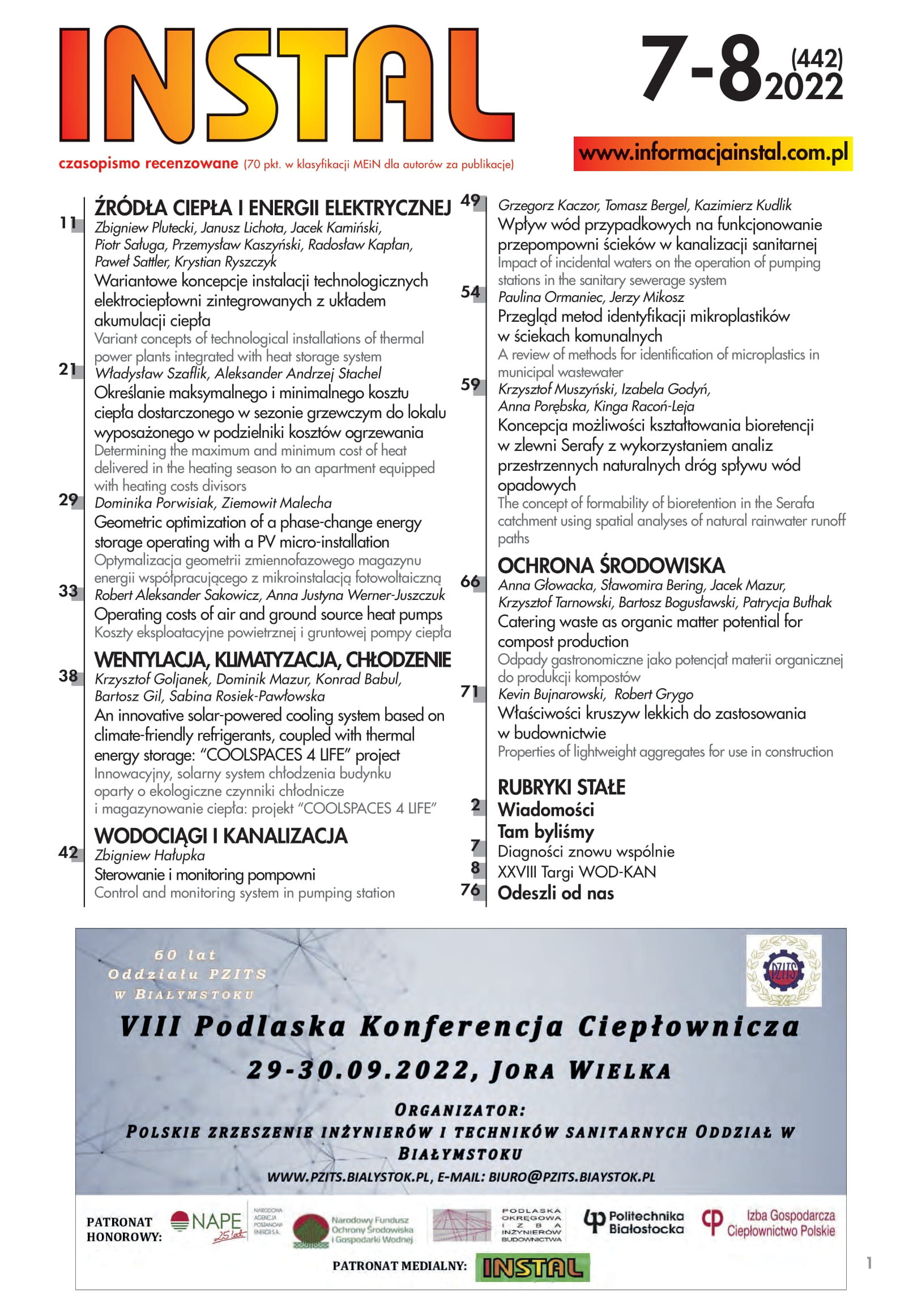
The concept of formability of bioretention in the Serafa catchment using spatial analyses of natural rainwater runoff paths
DOI:
https://doi.org/10.36119/15.2022.7-8.8Keywords:
sealing, surface runoff, flood risk, bioretention, runoff paths, adaptation to climate change, spatial and urban planningAbstract
Due to the progressive urbanization and climate change, in many cities the occurrence of serious threats of fluvial and pluvial floods is increasing. Commonly used flood protection measures are technical solutions, and the procedures to reduce the risk in flooding places in the lower parts of the catchment area are dominant. Meanwhile, the occurrence of flood risk is influenced by the entire catchment area located upstream. One of the important solutions to reduce the risk of flooding is the restoration and development of retention, including natural retention – bioretention. The catchment approach proposed in this paper allows to solve problems “at the source” of their formation. The method takes into account the analysis of the state of bioretention and the elaboration of a concept for its development, which is based on the assessment of sealing, surface runoff and existing green areas. As part of this study a fragment of the Serafa River catchment in Krakow and Wieliczka was analyzed in terms of the existing natural retention resources, the possibility of restoring the continuity of natural runoff routes and bioretention in order to minimize the risk of flooding. The exemplary application of the proposed tool based on publicly available data and software demonstrates the possibilities to consider in practice the approximate dependencies of the precipitation-retention-runoff process in an urban area, as a result showing how the development of bioretention in upstream areas can reduce the flood risk in Bieżanów. Estimating the amount of surface runoff generated in each cadastral unit and aggregating the runoff from the upstream units may provide urban planners with the necessary information for study work for the purposes of spatial planning, including greenery development.
Downloads
References
Bai T., Borowiak K., Wu Y., Zhang J. (2021) Highly Resolved Runoff Path Simulation Based on Urban Surface Landscape Layout for Sub Catchment Scale. Water 13:1345. doi: 10.3390/w13101345
[2] Dane GUGiK – Państwowy Rejestr Granic (PRG) http://www.geoportal.gov.pl. Dostęp: 24-11-2021
[3] Dane PZGiK – Główny Urząd Geodezji i Kartografii – Portal Gov.pl. https://www.gov.pl/web/gugik/dane-pzgik4. Dostęp: 24-11-2021
Downloads
Published
License

This work is licensed under a Creative Commons Attribution 4.0 International License.
Authors retain copyright and grant the journal the right of first publication, with the work simultaneously licensed under a Creative Commons Attribution 4.0 International License, which permits others to share the work with appropriate acknowledgment of the authorship and initial publication in this journal.