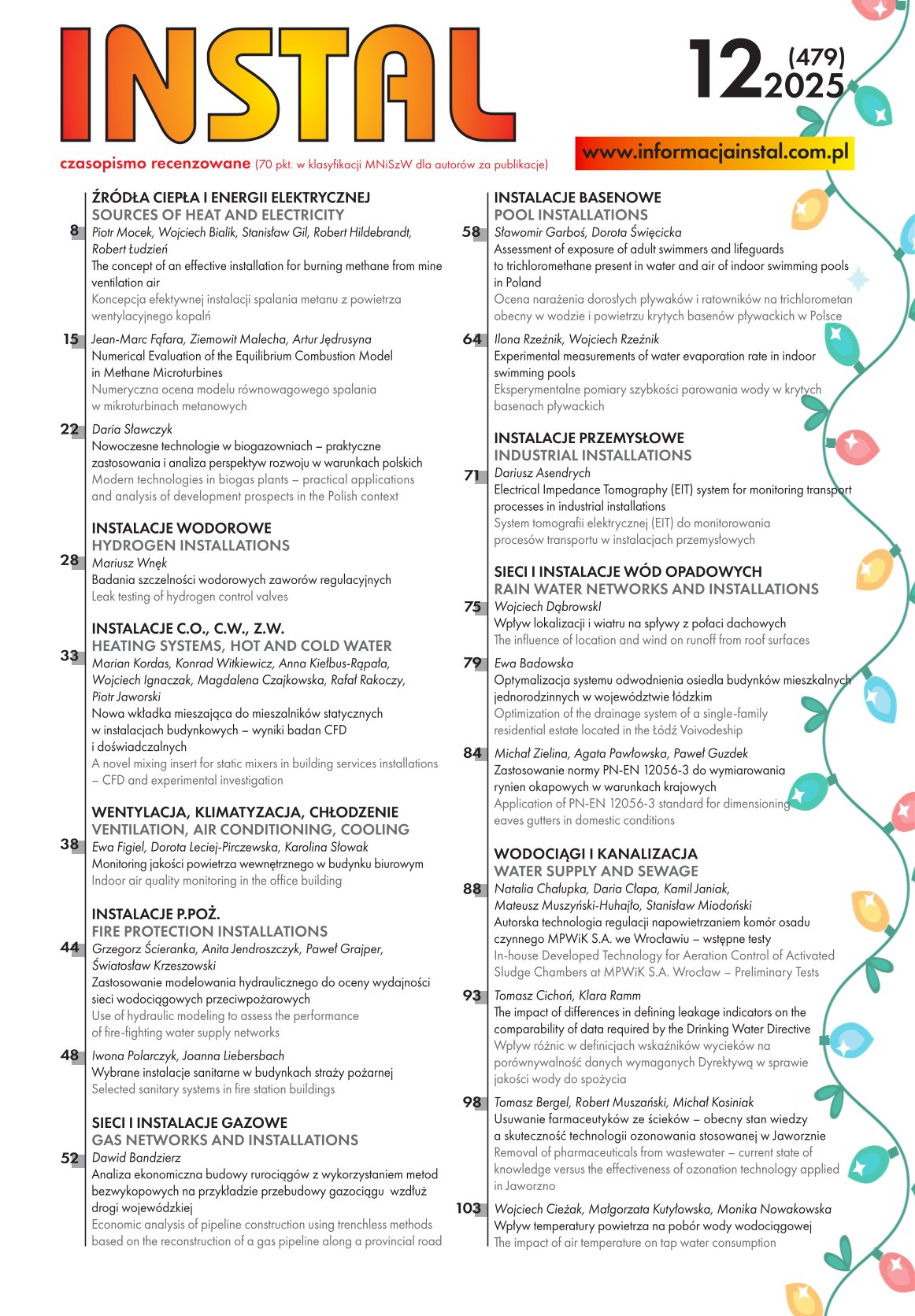
Removal of pharmaceuticals from wastewater – current state of knowledge versus the effectiveness of ozonation technology applied in Jaworzno
DOI:
https://doi.org/10.36119/15.2025.12.17Keywords:
pharmaceuticals, wastewater treatment, wastewater toxicity, ozonation, activated carbonAbstract
Pharmaceuticals present in wastewater pose a significant threat to the aquatic environment, as they can adversely affect organisms, leading to hormonal, immune and reproductive disorders. Traditional wastewater treatment methods are not effective in removing these pollutants, so additional solutions are needed. The new European Union Directive recommends the implementation of a fourth stage of wastewater treatment, which will allow for much more effective removal of pharmaceutical residues. It can also play a key role in protecting the aquatic environment and human health by reducing the introduction of harmful compounds into ecosystems. The proposed technologies include processes such as ozonation and filtration using activated carbon. These methods not only reduce the concentration of pharmaceuticals in water, but also, when the process is carried out correctly, reduce the overall toxicity of the wastewater. The results of research conducted in Poland on the effectiveness of these solutions confirm the necessity and effectiveness of introducing advanced treatment technologies. The paper presents the results of research conducted using a mobile station and then a container pilot station utilising an innovative ozonation system at the Jaworzno-Dąb sewage treatment plant in the Silesian Province. The analysis of the efficiency of removing pharmaceuticals such as diclofenac, sulfamethoxazole and carbamazepine from treated wastewater and the results obtained at an average level of 96.4, 92.6 and 96.3%, respectively, as well as lower ozone doses in terms of TOC than in the case of technologies used abroad, recommend the use of the technology used in Jaworzno for implementation in full-scale wastewater treatment plants in Poland.
Downloads
References
Węgrzyn A., Machura M., Żabczyński S., Możliwości usuwania środków cieniujących ze ścieków. Ochr. Środ. 2015, 37, 55-63. bwmeta1.element.baztech-c4643c36-e097-46ef-96f2-8a30900cd2f7.
Wydro U., Wołejko E., Struk-Sokołowska J., Puchlik M., Pozostałości farmaceutyków w środowisku oraz możliwości ich usuwania, in: Interdyscyplinarne zagadnienia w Inżynierii i Ochronie Środowiska, Wrocław, 2016, 286-299.
Dudziak M., Substancje aktywne biologicznie w środowisku człowieka. Wybrane problemy, Wydawnictwo Politechniki Śląskiej, Gliwice, 2018, 45.
Downloads
Published
License

This work is licensed under a Creative Commons Attribution 4.0 International License.
Authors retain copyright and grant the journal the right of first publication, with the work simultaneously licensed under a Creative Commons Attribution 4.0 International License, which permits others to share the work with appropriate acknowledgment of the authorship and initial publication in this journal.