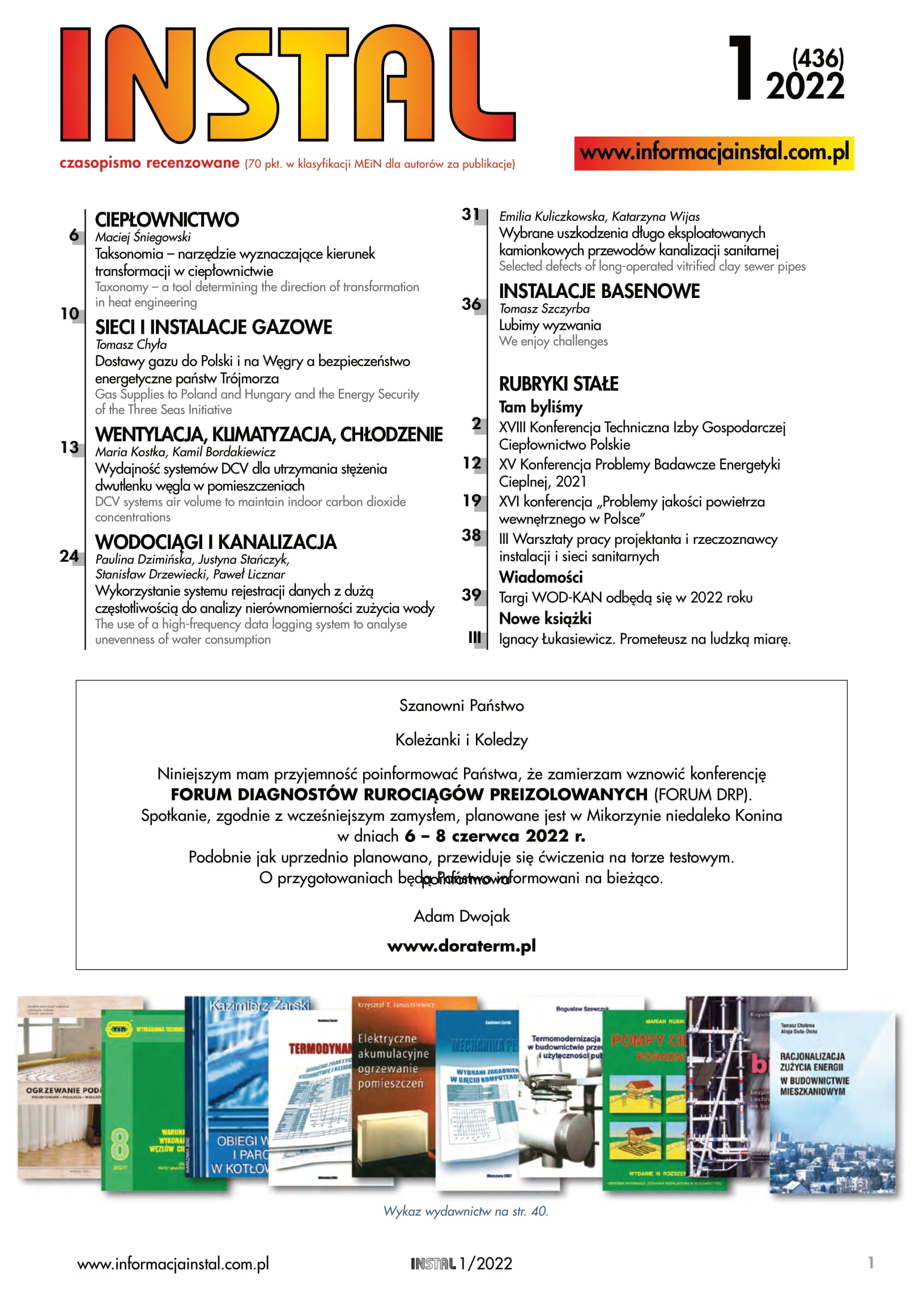
Wydajność systemów DCV dla utrzymania stężenia dwutlenku węgla w pomieszczeniach
DOI:
https://doi.org/10.36119/15.2022.1.2Słowa kluczowe:
wentylacja, strumień powietrza, DCV, VAV, CO2, IAQ, wentylokonwektoryAbstrakt
Komfort użytkowników przebywających w pomieszczeniach nie polega wyłącznie na zachowaniu odpowiedniej temperatury i wilgotności względnej. W pomieszczeniach przeznaczonych na pobyt ludzi niezwykle ważne jest także utrzymanie parametrów jakościowych, wpływających na bezpieczne i efektywne funkcjonowanie ludzkiego organizmu. W ostatnich latach najczęstszym dodatkowym parametrem monitorowanym w pomieszczeniach użytkowych jest stężenie CO2. Dotyczy to zwłaszcza popularyzujących się obecnie w Polsce systemów DCV, które w sposób ciągły dostosowują swoją wydajność do bieżących potrzeb pomieszczeń. W niniejszym artykule przedstawiono metodę określania antropogenicznej emisji dwutlenku węgla oraz zestawiono minimalne strumienie powietrza wentylującego wymaganego do utrzymania klas środowiska wewnętrznego przy wołanych w normie PN-EN 16798-1:2019-06. Jest to zagadnienie kluczowe na etapie projektowania systemu wentylacyjnego, gdyż może decydować o jego ostatecznej wydajności.
Pobrania
Bibliografia
PN-EN 16798-1:2019-06 Charakterystyka energetyczna budynków – Wentylacja budynków – Część 1: Parametry wejściowe środowiska wewnętrznego do projektowania i oceny charakterystyki energetycznej budynków w odniesieniu do jakości powietrza wewnętrznego, środowiska cieplnego, oświetlenia i akustyki – – Moduł M1-6
Bartkiewicz P., Wojtas K.: „Jakość środowiska wewnętrznego jako składnik systemów kompleksowej oceny budynków”, INSTAL 7-8/2021, s. 15-19, DOI: 10.36119/15.2021.7-8.2
Rozporządzenie Ministra Infrastruktury z dnia 12 kwietnia 2002 r. w sprawie warunków technicznych, jakim powinny odpowiadać budynki i ich usytuowanie
Pobrania
Opublikowane
Numer
Dział
Kategorie
Licencja

Utwór dostępny jest na licencji Creative Commons Uznanie autorstwa 4.0 Międzynarodowe.
Authors retain copyright and grant the journal the right of first publication, with the work simultaneously licensed under a Creative Commons Attribution 4.0 International License, which permits others to share the work with appropriate acknowledgment of the authorship and initial publication in this journal.