
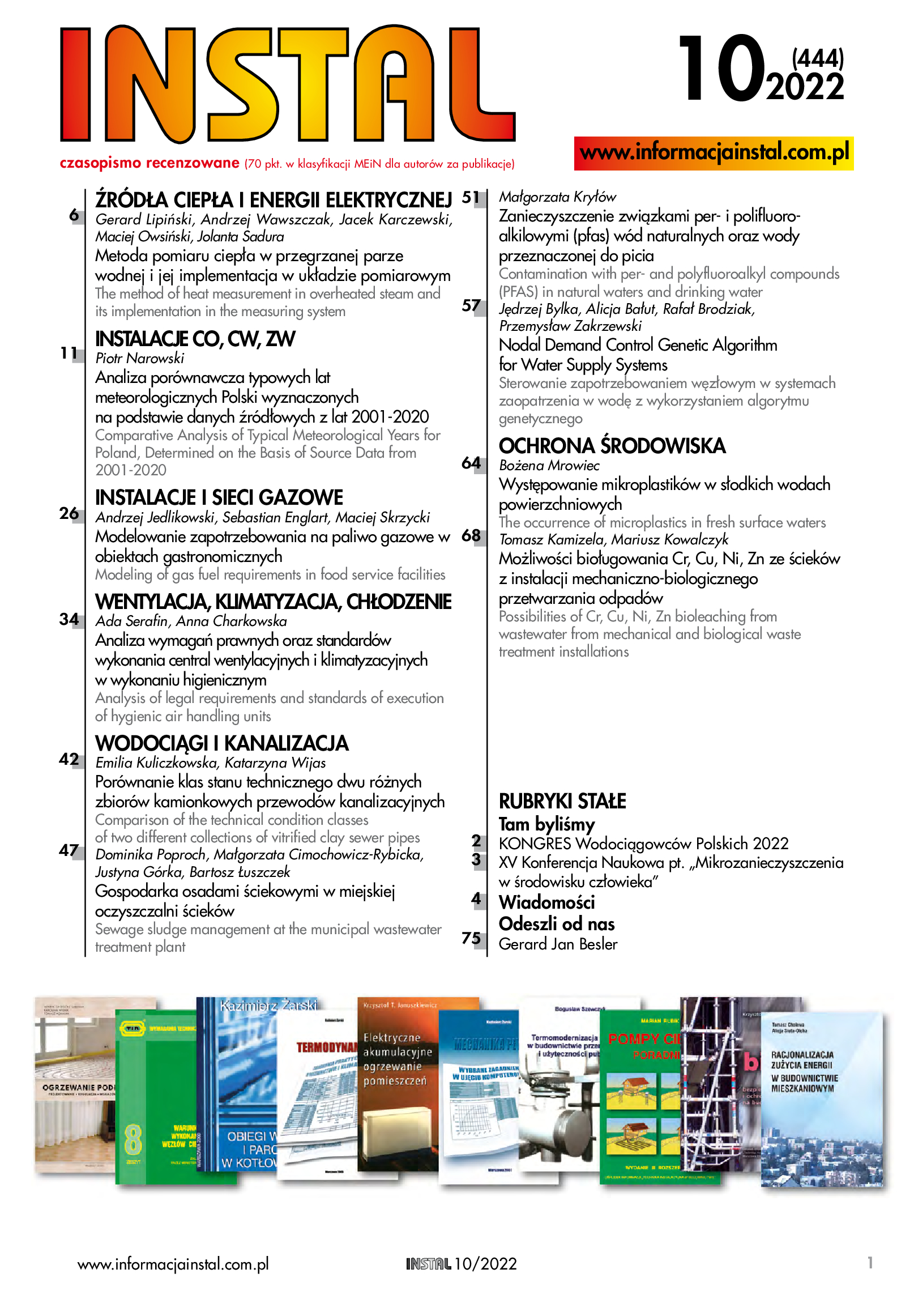
Modelowanie zapotrzebowania na paliwo gazowe w obiektach gastronomicznych
DOI:
https://doi.org/10.36119/15.2022.10.3Słowa kluczowe:
urządzenia gazowe, model matematyczny, przepływ obliczeniowy gazuAbstrakt
W artykule scharakteryzowano występujące w Polsce zakłady i placówki gastronomiczne. Opisano metody obliczeniowe umożliwiające wyznaczenie zapotrzebowania na gaz dla tego typu obiektów. Zwrócono uwagę na częstotliwość wykorzystywanych urządzeń gazowych do przygotowania potraw dla konsumentów. Przedstawiono problemy wynikające z braku uwzględniania współczynników jednoczesności podczas wyznaczania projektowanego natężenia gazu. Opracowano oryginalny model matematyczny uwzględniający zużycie paliwa gazowego podczas przy gotowania dań w placówce gastronomicznej. Na podstawie modelu napisano program komputerowy potrzebny do przeprowadzania symulacji numerycznych. Następnie za pomocą danych pomiarowych uzyskanych z zakładu zbiorowego żywienia dokonano walidacji modelu. Ponadto za pomocą metod obliczeniowych dostępnych w litera turze oszacowano natężenie przepływu gazu. Uzyskane wyniki symulacji porównano z rezultatami pomiarów. Wysoka zgodność modelu pozwoliła na uzyskanie wielu istotnych informacji. Brak uwzględniania współczynników jednoczesności prowadzi do otrzymywania podwyższonych wartości strumienia godzinowego przepływu gazu. Standardowa obsługa urządzeń gazowych wymusza konieczność stosowania niekiedy niższego płomienia gazowego palnika. Dzienne zużycie gazu podlega znacznym wahaniom spowodowanym zróżnicowanym czasem przy gotowania potraw dla konsumentów. W analizowanym przypadku zaobserwowano konieczność uwzględnienia współczynników jednoczesności wykorzystania urządzeń gazowych z zakresu 0,4–0,6. Dokładne określenie wartości redukcji projektowego zapotrzebowania na gaz wymaga dalszych badań i symulacji numerycznych dotyczących funkcjonowania zakładów gastronomicznych.
Pobrania
Bibliografia
GUS, Pojęcia stosowane w statystyce publicznej, Placówka gastronomiczna, (dostęp 08.06.2022) https://stat.gov.pl/metainformacje/slownik-pojec/pojecia-stosowane-w-statystyce-publicznej/300,pojecie.html.
GUS, Rynek wewnętrzny w 2020 roku (Archiwum lata 2010–2020), (dostęp 08.06.2022), https://stat.gov.pl/obszary-tematyczne/ceny-handel/handel/rynek-wewnetrzny-w-2020-roku,7,27.html.
MYTUJEMY, Za co płacą restauratorzy? Co wchodzi w koszty prowadzenia restauracji? (dostęp 08.06.2022), https://mytujemy.pl/
Pobrania
Opublikowane
Licencja

Utwór dostępny jest na licencji Creative Commons Uznanie autorstwa 4.0 Międzynarodowe.
Authors retain copyright and grant the journal the right of first publication, with the work simultaneously licensed under a Creative Commons Attribution 4.0 International License, which permits others to share the work with appropriate acknowledgment of the authorship and initial publication in this journal.